Plastering Guide.
What actually is plaster?
Not the first thing on the wall.
A common mistake is to think plaster is the first thing on the wall. before plastering can take place there is a number of steps that need to be done in order to actually achieve a finish let alone a good one.
-Walls getting re-plastered may only need light prep work such as applying a product called Bonding to any large holes such as where an old light switch was. Then if the paint on the wall is deemed stable a suction control layer of a mixture of PVA or SBR or a grit product mixed with water can be applied.
-Bare walls such as brick work, block work, old render or a mixture of backgrounds would require another process. The two real options would be to use Hardwall or to Plasterboard the wall. To Hardwall the wall it still need all the prep works as before and then it is mixes and applied to the wall by a plasterer. To plasterboard a wall it can be attached to the wall using battens plugs and screws or by using a product called plasterboard adhesive (dot and dab).
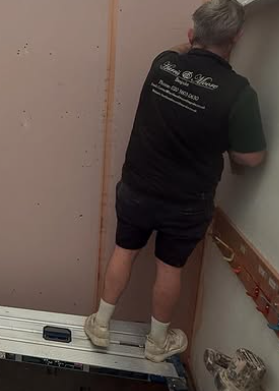
-Plasterboard walls and ceilings are often the easiest to plaster as often if the boards are new and in good condition they just need scrim tape applied over the joints and and beads attached to corners for the plastering to start.
What is the process?
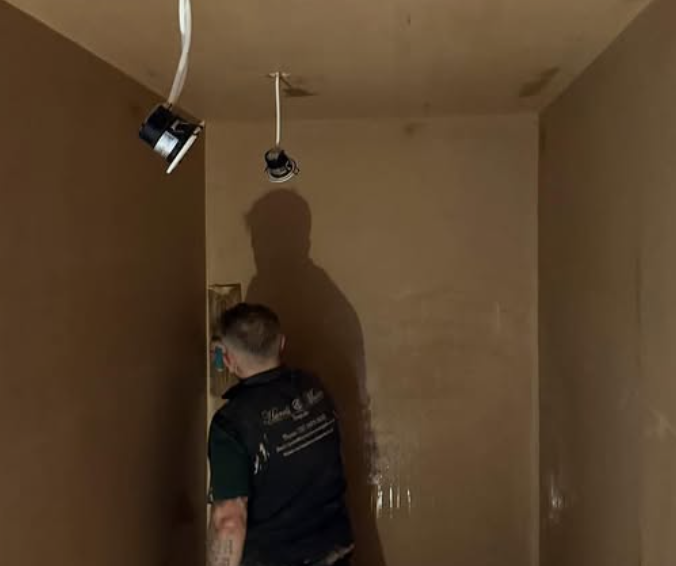
Before any plaster goes on, your plasterer needs to ensure surfaces are clean & dust-free, loose material removed, holes & cracks filled, corners/beads fixed if needed (angle beads, stop beads), backgrounds primed (PVA / bonding agent / grit etc.).
Good prep is critical — bad prep = bad finish.
Then the first coat Multi-Finish plaster (or equivalent) is applied across the area at around 2–3mm thickness and laid on evenly. This coat helps fills imperfections and provides material to work from for the second coat.
When the first coat “tightens up” (starts to firm), the second, thinner coat is applied to brings uniform thickness and closes up pores in the plaster this is then flattened off sometimes sponge floated.
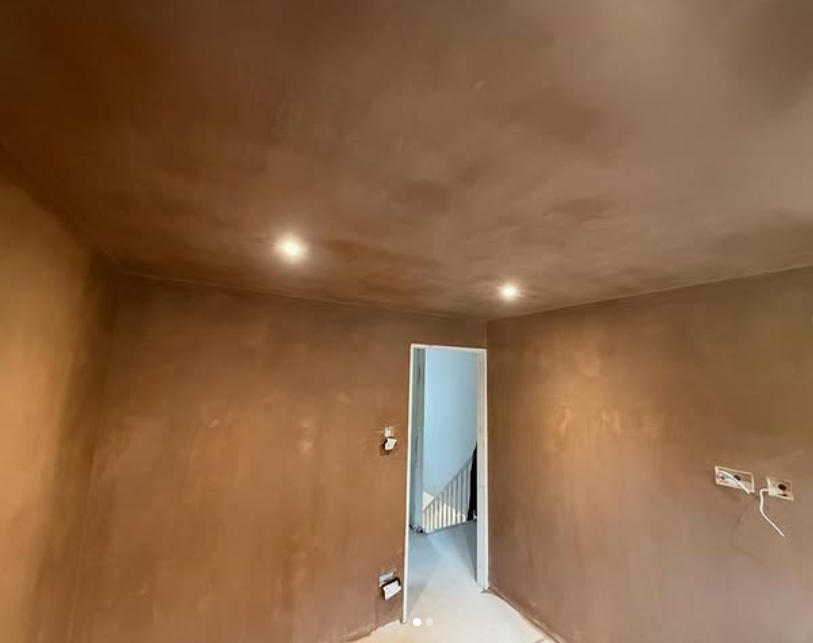
This is now where someone DIYing (or a have a go builder) often wish they had hired a plasterers. It’s not impossible but plastering is a trade that can often take years to get right and decades to be the very best, it's all about timing. A first trowel to flatten ridges & lines then a second trowel (firmer) — smooth out imperfections and lastly a final trowel (nearly set). these stages can take a longer or shorter time from wall to wall. Water is sometimes sprayed or flicked to keep it workable depending on technique. When finished your wall should be smooth, flat and ready for paint(ones dry)
How to choose a good plasterer.
When we talk about plaster in UK construction we are talking about products such as British Gypsum multi-finish or board finish, not the same plaster that is put on your arm by a doctor (we’re definitely not doctors) if you break it. The fine finish product is applied in a time sensitive process on walls and ceilings to give a flat and smooth finish ready for decoration.
The best way we can answer this honestly is to explain ways that customers find us: Good Google reviews or online. Word of mouth from other trades or neighbours who have had work done or friends or family of our customers often recommend us. Other Trades know who’s good because they’ve seen the finishes in person.